


LAST NEWS

Hanoi's Smart Transport Ambition
Smart transport is fast becoming a strategic priority for Hanoi, yet the reality of AI adoption in urban management remains fragmented, underpinned by weak data infrastructure and lacking a people-first approach.

A key venue for understanding between policemakers and businesses
The Vietnam Connect Forum has become a key venue for bringing government, authorities, and businesses together to discuss issues of concern.
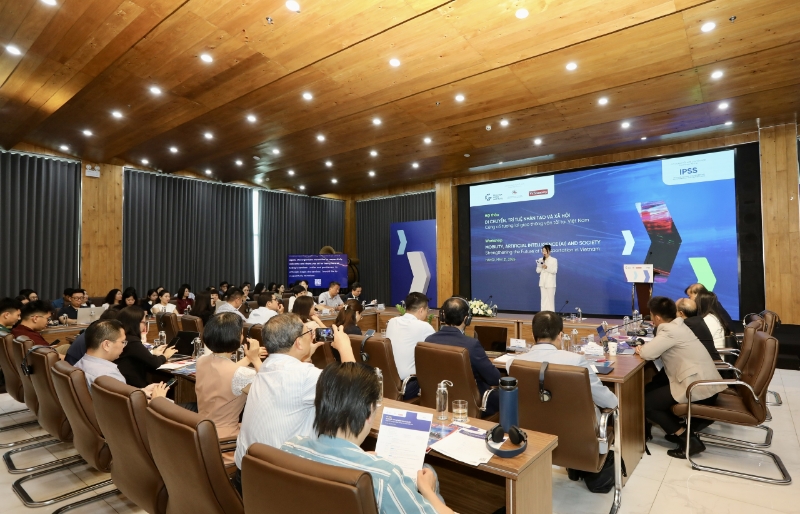
AI and the Future of the Transportation Sector in Vietnam
A seminar on May 21 outlines how the convergence of artificial intelligence, mobility models, and societal expectations will reshape the transportation sector in Vietnam.

For integrated partnership between FDI and domestic enterprises
Policymakers, foreign investors, and domestic business leaders attending the Vietnam Connect Forum 2026 had varying opinions on how domestic and foreign enterprises can partner each other.

National scientific conference on innovation of national development model
The conference aims to provide a comprehensive evaluation and discussion on several key areas including the analysis of the international and domestic context to provide strategic forecasts and orientations for Vietnam’s future leading up to...
Gov't paves the way for Vietnamese businesses to expand globally
Song Hà | 04/08/2026
Priority will be given to enterprises with high technological and innovative capabilities, as well as those with superior competitiveness in spearhead sectors capable of leading industries and creating impact within value chains.
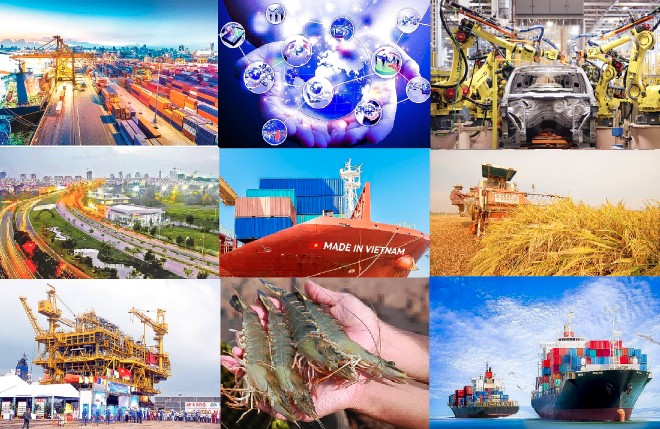
To remove institutional bottlenecks and promote a comprehensive global presence for the private economic sector, Deputy Prime Minister Nguyen Chi Dung has signed Prime Ministerial Decision No 626/QD-TTg, approving the "Going Global Program for the 2026–2030 Period."
The program is designed to focus on resolving institutional and policy hurdles to encourage, facilitate, and manage risks for businesses operating in foreign markets. It aims to ensure transparent access to resources—including investment, finance, infrastructure, technology, information, and human resources—while streamlining administrative procedures to be compatible with highly competitive economies.
The program encourages enterprises to invest and do business abroad in sectors where Vietnam holds a competitive international advantage, high added value, and strong spillover potential. Key areas of focus include strategic investments, mergers and acquisitions (M&A), the establishment of distribution centers, bonded warehouses, industrial parks, wholesale and retail systems, agencies, representative offices, Research and Development (R&D) centers, and after-sales services in overseas markets.
Priority will be given to enterprises with high technological and innovative capabilities, as well as those with superior competitiveness in spearhead sectors capable of leading industries and creating impact within value chains. Innovative startups with global business models are also a primary focus.
The program's overarching goal is to help Vietnam’s private sector increase its international presence comprehensively, effectively, and sustainably in both scale and quality through international investment and deeper integration into regional and global supply and value chains.
Specific targets by 2030 include:
At least 10,000 businesses to be trained in implementing global investment and business activities;
At least 1,000 businesses to receive consultancy and support in developing international expansion plans;
At least 100 businesses to receive intensive, comprehensive support for overseas investment, with 30% of these investing through M&A;
At least 100 businesses to receive end-to-end support—from research, design, and production to distribution and international branding—to join regional and global value chains. Among these, at least 20 large enterprises in spearhead and strategic industries are expected to integrate into global supply chains; and
At least 100 businesses to receive comprehensive support for effective operations on domestic and international cross-border e-commerce platforms, with at least 10 businesses achieving online export revenues exceeding $10 million.
Source: Vneconomy


