


LAST NEWS

Vietnam, Russia expand business cooperation through B2B trade connections
The event aims to create new opportunities for cooperation across a range of sectors, including agriculture, food, chemicals, fertilizers, mechanical engineering and manufacturing, information technology, and logistics.
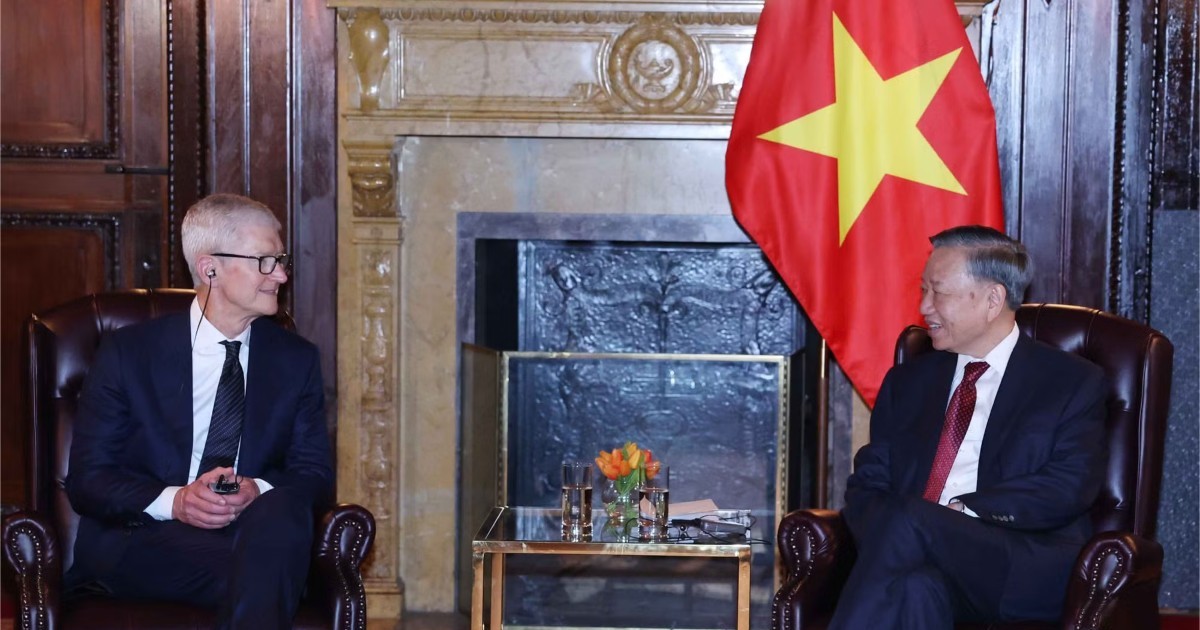
Top Vietnamese leader meets representatives of major US groups in New York
The meetings took place on September 21 (local time) during the top Vietnamese leader’s trip to the US to attend the High-Level General Debate of the 81st Session of the United Nations General Assembly and conduct bilateral activities.
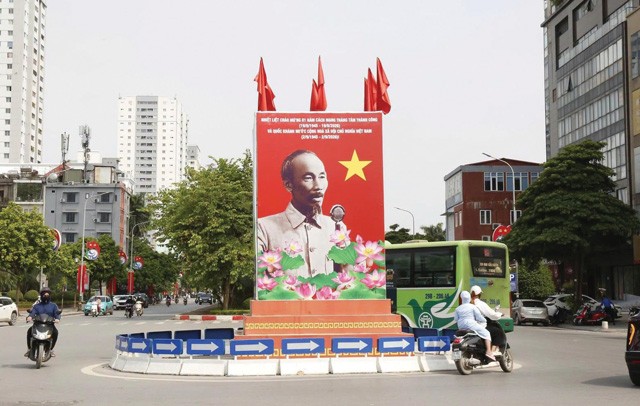
Vietnam is celebrating the 81st anniversary of the August Revolution and National Day, September 2, 1945 - 2026.

Vietnam - US agricultural trade growing over time
Agricultural trade between Vietnam and the US is rising every year and hitting record levels, with initiatives in place and on the way to broaden product offerings and expand access further.
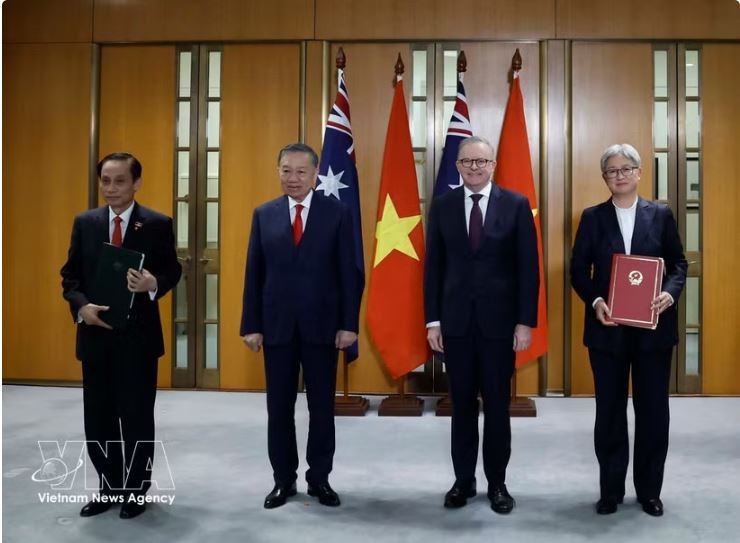
Vietnamese, Australian leaders witness exchange of cooperation documents
The joint statements comprise one on deepening the Vietnam-Australia comprehensive strategic partnership, one on economic resilience cooperation, and another on the enhancement of science, technology and innovation connectivity.
Vietnam moves to fast-track foreign investment with new action plan
VnEconomy | 09/23/2026
Localities are to build a portfolio of priority projects for investment attraction that align with their potential, advantages, and regional and local development orientations.
Deputy Prime Minister Nguyen Van Thang, on behalf of the Prime Minister, on September 22 signed the Government's Resolution No. 280/NQ-CP, promulgating its Action Plan to implement the Politburo's Resolution No. 10-NQ/TW dated June 8, 2026, on the development of the foreign-invested economic sector, according to a report by the Government News.
To achieve the goals set out in Resolution No. 10-NQ/TW, in the coming time, alongside regular duties, ministries, sectors, and localities must concretize and drastically implement the following tasks.
They must innovate thinking and unify awareness regarding the position and role of the foreign-invested economic sector; perfect institutions and improve the business and investment environment; develop high-quality human resources; and attract and utilize talent.
Additionally, it is essential to upgrade and perfect infrastructure to attract strategic investments; innovate orientations for attracting foreign investment by sector, field, and region; promote the green economy, digital economy, and technology transfer while increasing spillover effects and linkages with the domestic economic sector; innovate and improve the efficiency of investment promotion; enhance the effectiveness of state management; and perfect mechanisms and policies related to indirect foreign investment.
They are required to fully apply digital transformation to maximize the reduction of administrative procedure processing times.
Mechanisms to support foreign-invested enterprises in worker training
Regarding the development of high-quality human resources and the attraction and utilization of talent, the Government requires the Ministry of Finance to study and report to competent authorities to issue policy mechanisms allowing localities to use local budgets to subsidize foreign-invested enterprises' costs for worker training at their training facilities, both domestically and internationally.
Preferential and flexible policy mechanisms for core projects
Regarding the innovation of foreign investment attraction orientations by sector and field, the Resolution clearly states that the Ministry of Finance shall study and report to competent authorities to formulate outstanding preferential and support policy mechanisms, as well as special and flexible investment procedures for priority core projects attracting foreign investment. These incentives must be tied to the results of implementing commitments on technology transfer, research and development (R&D), worker training, domestic value-added generation, domestic supplier development, green transition, and digital transformation. It is also tasked with defining criteria, selection processes, monitoring mechanisms, and support measures for strategic investment projects suitable for each development stage.
Localities are to build a portfolio of priority projects for investment attraction that align with their potential, advantages, and regional and local development orientations. They must determine a roadmap for attracting foreign investment, integrate it into their annual and 5-year socio-economic development plans, and prioritize attracting high-quality projects capable of creating spillover effects and connecting with local domestic enterprises to develop industry clusters and industrial-service ecosystems.
Source: Vneconomy


